
Wedding Guest Dress Etiquette Explained: A Guide for Stylists and Wedding Guests

Wedding season is officially here, and with it comes one of the most common questions personal stylists and image consultants hear from clients:
“What should I wear to a wedding?”
It sounds simple, but wedding guest dressing can be surprisingly nuanced. Between deciphering dress codes, respecting cultural traditions, navigating venue logistics, and avoiding style faux pas, many guests feel overwhelmed.
As a stylist, this is where your expertise becomes invaluable.
Whether you're helping clients prepare for a countryside ceremony, a destination wedding, or a black-tie evening reception, understanding wedding guest etiquette allows you to recommend outfits that feel polished, appropriate, and effortlessly stylish.
In this guide, we’ll break down the most common wedding dress codes, share the key dos and don’ts of wedding guest dressing, and answer the questions clients ask most often.

Why Wedding Guest Etiquette Still Matters
In an era of “wear whatever makes you happy” fashion advice, some people question whether traditional wedding etiquette still applies. The answer is yes — although the rules have evolved.
Weddings are deeply personal events. The venue, aesthetic, timing, and dress code are often carefully chosen to create a specific atmosphere. Ignoring those details can unintentionally come across as dismissive or attention-seeking.
For stylists and image consultants, understanding wedding etiquette is an important part of helping clients dress with emotional intelligence rather than just style. The goal is to ensure clients feel confident, appropriate, elegant, and comfortable without overshadowing the couple or misreading the occasion.
The best-dressed wedding guests are rarely the loudest people in the room. They are the ones who look effortlessly aligned with the setting.

The Golden Rules of Wedding Guest Dressing
Before we decode individual dress codes, these universal etiquette principles apply to almost every wedding.
1. Don’t Wear White (or Anything That Looks White)
This remains the cardinal rule of wedding guest dressing.
Avoid:
White
Ivory
Cream
Champagne
Very pale blush
Silver that photographs as white
Even if the outfit has a print, if the overall impression appears bridal, it’s best avoided.
Stylist Tip: Smartphone photos and flash photography can make pale tones look brighter than they appear in person.
2. Respect the Dress Code
If the invitation specifies black tie, cocktail attire, or festive dress, take it seriously.
Ignoring the dress code can make a guest stand out for the wrong reasons.
3. Consider the Venue
A stiletto heel may look beautiful, but it is impractical on grass, sand, or cobblestones.
Always factor in:
Terrain
Weather
Accessibility
Ceremony duration
4. Dress for the Season
Summer weddings call for breathable fabrics, while autumn and winter events may require richer textures and layering.
5. Avoid Overly Revealing Outfits
A wedding is a celebration, not a nightclub.
If an outfit feels too sheer, too short, or excessively low-cut, it may not be appropriate.
6. When in Doubt, Slightly Overdress
It’s easier to remove a blazer or simplify accessories than to compensate for being underdressed.
Do Not Compete With the Couple
One of the biggest modern wedding guest mistakes is dressing for social media instead of the event itself.
Ultra-sheer fabrics, dramatic trains, excessive embellishment, or intentionally provocative outfits can feel inappropriate, even at fashion-forward weddings.
Guests should look memorable for the right reasons — polished, stylish, and respectful.
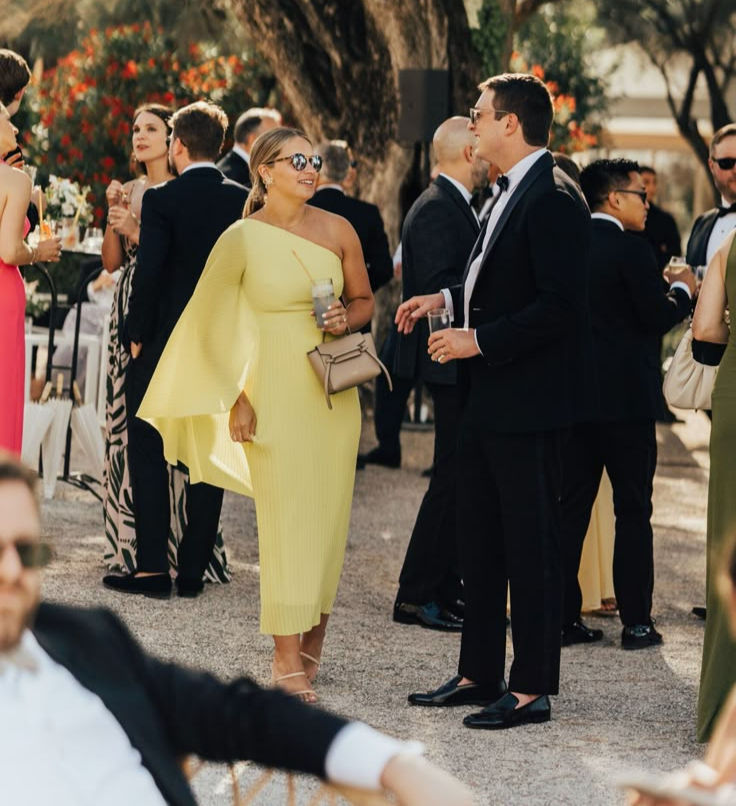
Wedding Dress Codes Explained
Black Tie Optional / Formal
This dress code gives guests slightly more flexibility while still maintaining a formal atmosphere.
Appropriate Choices
Long dresses
Structured midi dresses
Elevated jumpsuits
Dark tailored suits
Optional tuxedos
Stylist Insight
This is one of the easiest dress codes to misinterpret. Clients often lean too casual. If unsure, it is always safer to dress slightly more formally.
Cocktail Attire
Cocktail attire remains one of the most common wedding dress codes and one of the most versatile.
Appropriate Choices for Women
Midi dresses
Chic cocktail dresses
Tailored jumpsuits
Elegant separates
Appropriate Choices for Men
Dark suit
Dress shirt
Tie optional, depending on the venue
Smart leather shoes
What to Avoid
Clubwear
Extremely short hemlines
Overly revealing silhouettes
Casual fabrics like jersey
Cocktail attire should feel polished, celebratory, and refined — not nightclub-inspired.
Semi-Formal or Dressy Casual
This dress code is often used for daytime weddings, garden weddings, or smaller, intimate celebrations.
Appropriate Choices
Flowy dresses
Skirt and blouse combinations
Relaxed tailoring
Chic co-ords
Linen blends in warmer months
Footwear Matters
Encourage clients to consider practicality alongside aesthetics. Outdoor venues and grass surfaces rarely pair well with stiletto heels.
Casual Wedding Attire
“Casual” does not mean careless.
This dress code simply allows for a more relaxed interpretation of occasionwear while still respecting the event.
Appropriate Choices
Sundresses
Maxi dresses
Tailored trousers
Lightweight blazers
Smart loafers or dress sandals
Avoid
Denim
Athleisure
Graphic T-shirts
Flip-flops
Anything that feels too beach-holiday casual unless specifically requested
Special Considerations for Stylists and Image Consultants
Balance Personal Style with Occasion

Clients often want to express individuality. Your role is to ensure their look remains appropriate for the event.
Understand Cultural Etiquette
Some weddings have religious or cultural expectations regarding:
Modesty
Colour symbolism
Head coverings
Footwear
Encourage Outfit Rewearing
Wedding guest dressing does not require a new outfit every time.
Recommend:
Different accessories
New shoes
Alternative styling
Layering pieces
This is both sustainable and cost-effective.
The Rise of Wedding Guest Styling in 2026

Wedding guest dressing has become its own fashion category, particularly with the rise of destination weddings, curated aesthetics, and social media photography.
Many guests are now seeking professional styling advice, not because they lack fashion sense, but because they want help interpreting:
Ambiguous dress codes
Luxury wedding expectations
Venue-appropriate dressing
Seasonal styling
Colour etiquette
Repeat outfit styling
For personal stylists and image consultants, this presents a valuable opportunity to offer:
Wedding guest styling packages
Dress code consultations
Packing edits for destination weddings
Wedding season capsule wardrobes
Accessory styling sessions
Final Thoughts: Wedding Style Is About Respect and Confidence
The best wedding guest outfits strike the perfect balance between personal style and event etiquette.
As a personal stylist or image consultant, your guidance helps clients feel elegant, appropriate, and confident—while ensuring the focus remains exactly where it belongs: on the couple.
When in doubt, choose timeless over trendy, polished over provocative, and respectful over attention-seeking.
Because at every wedding, great style should complement the celebration, not compete with it.
Happy Styling!
Louisa 💕